
Using Books in Speech Therapy
Speech-language pathologists know using books is one of the BEST ways to build language, but are often quick to assign that task to caregivers. Our graduate school classes are great at telling us the “why” we should do something but tend to be weaker in the “how.” If you don’t get experience working with another therapist who incorporates books into the therapy room, it’s easy to feel a little uncertain as to how to do it. The challenges of using books in speech therapy It takes a looong time. Most story books are long especially if they are designed for

Why Action Words are Important
The role of verbs in language development The first words children say are almost always labels for common (to them) objects or people. Makes sense, right? It’s easier to attach meaning to a noun especially one that we have a lot of experience or interaction with. As little ones start building their vocabulary, you’ll find they move on to a wider variety of words. Social words/greetings: These are words like “hi” and “bye” and ones that go along with social games like “peek-a-boo” (even if it’s shortened to just the “boo”). Verbs: These begin as labels for actions like “jump”
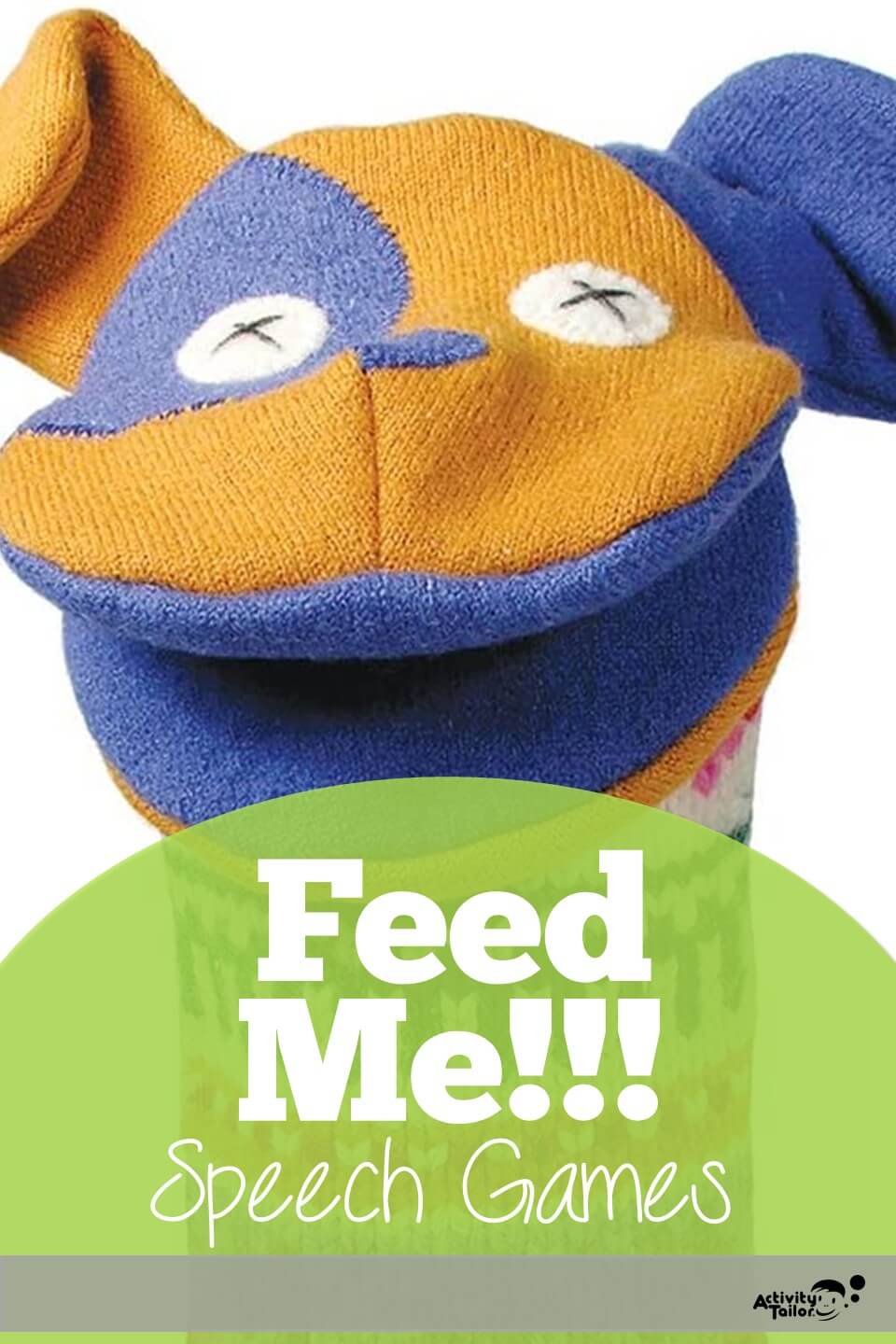
Feed Me Games for Speech Therapy
“Feed Me” games for speech therapy are classics because they: are easy to set up engage kids for a long time While they are most often used for articulation trials, they can be used for a wide range of language goals too. Ready to add a “feed me” game to your speech therapy room? Let’s get started! What you need At it’s most basic, you’ll need something that “eats” and food to feed it, but that leaves space for a lot of creativity! As an Amazon affiliate, I may receive a small commission if you purchase products through my links.

What counts as a first word?
Parents are often surprised (and relieved) at our first meeting when I let them know that a lot of the communication their child is attempting does count as a first word. What counts as a first word? A word is any consistent, and generally unique label, for a specific object, person, action, etc. Here are a few things that count: Exclamations Environmental and animal sounds Signs Vocal approximations Exclamations: These are some of the first words little ones pick up because they are usually said with a lot of emphasis and intonation. These include “uh-oh” and “ow!” Environmental and animal

The BEST ways to use ice cream in language therapy!
Keep children engaged in therapy with ice cream themed activities Yum! Let’s bring some ice cream themed activities into our speech room! Whether you are seeing summer students, tying it in with field day or school spirit days, or using it for birthday celebrations, ice cream is a fun, child-approved theme. It can target all your speech and language goals too! Win, win! Use toys Let’s be honest. Kids love toys. When we pull them out for sessions we have instant excitement and engagement! Here are a few of my favorites to use with ice cream themed therapy sessions: *As

How to Avoid SLP Burnout
6 happy habits to make next year easier (& they’re not what you think!) Most school based SLPs will have ten glorious weeks to enjoy the summer. Hmmm…maybe a bit less when we consider the first couple of weeks are needed to recuperate from the past year. And maybe the last week is more about prep for going back…Still, seven weeks to recover, refresh, and indulge is a wonderful opportunity! How will you use yours? Most importantly, how can you avoid SLP burnout in the first place? If you are one of those SLPs always on the brink of burnout

Avoid SLP Burnout
How to maintain your momentum as an SLP for over 20 years If you are in any of the SLP Facebook groups, you’ll notice an inordinate number of posts about SLP burnout. For those new to the field, or looking to get into the field, it can be discouraging. Who wants to spend a few grueling years in graduate school, acquiring school debt, only to feel defeated within the first several years of employment? Or maybe you’re watching the end of the summer approach faster than you can believe and wonder if this school year will be as bad as

Ocean Themes in Speech Therapy
When you think ocean themes in speech therapy are you assuming it’s for those of us who see students in the summer? It’s time to reconsider! Ocean themes cover a wide range of activities which means an even wider range of speech and language goals to target. Related themes or titles: Sea creatures Under the Sea Speech on the Beach Sharks Pirates A visit to the Aquarium Speech rooms love pirate themes in September to tie in with Talk Like a Pirate Day! Books with an Ocean Theme Links to purchase books may contain Amazon affiliate links. I receive a

Conversation Starters in Language Therapy
Use conversation starters in language therapy as a must have Back-to-School activity for your speech room. Conversation starters are a great way to work on articulation, vocabulary, language skills and fluency with a controlled topic. They’re also a way to kick off the school year when you need a low-prep activity to covertly assess skills in natural conversation. How to use conversation starters in language therapy Draw a card and answer the question: This is the typical format for these kinds of language activities, but consider all the possible subtlties! You can read the question aloud and see who struggles

Picnic Themed Language Activities for Speech Therapy
Step into spring or summer with picnic themed language activities in your speech room! I see students year round and this year I kicked off my summer sessions with a picnic theme. By using themed based activities across the board, it simplifies my planning and how much stuff I need to travel with. Check out these easy-to-implement activities below and be sure to scroll all the way to the bottom for some free printables! Links provided may be Amazon affiliate links. As an Amazon Associate, I earn from qualifying purchases. Thank you for supporting my blog! If you love play

Impacts of COVID-19 on Communication: Key Factors for Parents & SLPs
The COVID-19 pandemic left a lasting impact on many parts of life, including children’s speech and language development. Since the lockdown in 2020, there has been a significant increase in children with speech and language delays. For both parents and SLPs, understanding the root causes of these issues and addressing the delays is vital to the success of these children. Let’s consider the impacts of COVID-19 on communication and what can be done to help families and their children! Silent Impact of COVID-19 on Communication Development While physical health concerns were at the forefront of COVID-19, the results were so

Exploring New Horizons: Alternative Careers for SLPs
Are you feeling like your career as an SLP is no longer for you? Does what once ignited you full of passion now seem like a dull flame or just embers? You’re not alone in these thoughts, and you aren’t out of options! Your skills, education, and experience set you up for success in other ways. It’s time to explore new horizons and consider viable alternative careers for SLPs! Reimagine Your Role Within Speech-Language Pathology Before diving head first into the many alternative careers for SLPs, stop to consider if a possible shift within the profession might rekindle your excitement.

A Helpful Guide for Preparing for the Holidays in Speech Therapy
The holiday season is upon us! With it comes a variety of opportunities and challenges in the world of speech-language therapy. The holidays are usually filled with excitement, changes in routines, and many new sensory experiences that can both motivate and overwhelm the children you work with. As an SLP, it’s important to navigate this time of year thoughtfully in order to best support your clients and their families. Consider these helpful tips for preparing for the holidays in speech therapy! Special Considerations While Preparing for the Holidays in Speech Therapy Before jumping straight into lesson planning for holiday speech

3 Powerful (& Simple!) Ways to Embrace Diversity in the Speech Room
For SLPs, being intentional to create an inclusive environment isn’t just about best practices— it’s vital! One of the most important things you can do for your students is to provide resources that reflect their own families and communities. This approach to therapy encourages greater self-esteem and stronger connections with caregivers. Check out these 3 easy ways to embrace diversity in your speech room this year! Why You Should Embrace Diversity Diversity includes race, religion, age, disabilities, and other important pieces of a person’s identity. Research consistently shows that representation matters and that’s no different when providing speech and language

5 Practical Tips for Managing Speech Therapy Groups with Confidence & Success
In the world of school-based speech therapy, managing speech therapy groups is often an area SLPs don’t feel prepared for. Handling multiple students at once can be challenging, but with the right strategies and mindset, it can also be highly effective and rewarding for everyone. Rest assured— managing speech therapy groups can be done with confidence and success! Common Challenges with Speech Therapy Groups Managing speech therapy groups comes with its unique set of challenges: To address these challenges, you will need well-thought-out strategies, patience, and a positive mindset. Managing Speech Therapy Groups with Success It’s important to choose strategies

4 Tips for School-Based SLPs: How to Have Tough Conversations with New Teachers
The beginning of the school year can be challenging for school-based SLPs— especially when working with teachers who are either new to your school or new to the field. Effective communication and collaboration with teachers are vital to providing the best care for students. Understanding common problem points in advance will help you be better prepared for your interactions with new teachers. Use these 4 tips to have tough conversations with new teachers and make this school year easier for everyone! Common Problem Points Expect to encounter at least one of these common challenges with new teachers. As you consider

3 Considerations to Increase Caregiver Involvement in Speech Therapy
As a pediatric SLP, you understand the importance of caregiver and parent involvement in speech therapy— but caregivers often do not! Building effective partnerships with caregivers is crucial for the success of your therapy sessions and the overall progress of your clients. Caregivers don’t usually anticipate this expectation for collaboration so it’s up to you to be clear from the start. Increase caregiver involvement in your speech therapy sessions in 3 easy steps! Importance of Caregiver & Parent Involvement in Speech Therapy Caregivers need to know from the start that speech therapy is a collaboration. Many caregivers are often misinformed
Everything You Need to Know to Begin Treating Phonological Processing Disorders
Treating phonological processing disorders is a key piece of what you do as a pediatric SLP. It’s important to understand how phonological processing disorders differ from other speech sound disorders, how to get caregivers on board, and how to choose the best treatment approaches to help your clients. You CAN help children develop more intelligible speech and set them up on a path for successful communication all of their lives! Understanding Phonological Processing Disorders Before you begin to educate caregivers about phonological processing disorders (PPDs), it’s important to ensure you have a solid understanding of this type of speech sound

3 Ways to Handle Caregivers Who Don’t Follow Through with Speech Therapy Suggestions
As an SLP, you understand the frustration with caregivers who don’t follow through with speech therapy suggestions after they’ve asked. You KNOW progress would be so much faster if carryover was happening at home! This can be especially challenging, but it’s important to consider why this breakdown is happening and consider what you can do to help. Why Aren’t Home Activities Happening? There are a few different reasons why caregivers may not be following through with the home activities you suggest after therapy sessions: Because each of these reasons is different, your approach to helping families work through them will

Creating Systems: 3 Ways to Make Life Easier as an SLP
As a pediatric SLP, your days are filled with countless responsibilities from providing therapy to completing paperwork to educating caregivers. It’s so easy to become overwhelmed, but take heart! There is a way to make your life easier as you start the upcoming school year– creating systems. By focusing on your biggest challenges, you can create systems and routines that save time during busy days, reduce stress, and prevent burnout. You’re worth this investment! Identify Your Biggest Struggles Before Creating Systems According to James Clear’s book Atomic Habits, success is not achieved by relying on willpower or pure discipline. Success