Blog for Parents

Bubbles for Early Language Development

Bubbles and early language are a perfect match. It’s cheap and easy to carry. If you can overlook the periodic spill, it’s nearly perfect. Bubbles lend themselves easily to early language development—i.e. requests/demands (depends on your perspective), joint attention, turn-taking, size concepts, etc. plus early developing speech sounds like “b,” “p,” and “m.” Using bubbles for lip sounds (bilabials) When it comes to speech sounds, let’s talk about what bubbles are (and aren’t) good for: Lip sounds, like b, p and m, are some of the earliest to develop because the movement is a bit more broad and it’s very
Read More »

Teaching Classroom Routines at Home

It’s the procedures at school that often indicate early success—even more than the actual academic skills. Practicing and teaching classroom routines at home can go a long way in classroom success and your child’s confidence since it’s the procedures at school that often indicate early success—even more than the actual academic skills. While these skills are particularly important for our PreK and Kindergarten students who are just starting “real school” a review for little ones in first and even second grade can be beneficial given how long most have been (or will be) out of a formal school setting. Circle

Read More »

Teaching Prepositions to Toddlers and Preschooler

Prepositions are little words with an important responsibility. These are what we use to indicate the location or position of things. They’re words like “in,” “under,” “behind” and “next to.” Some of these develop early, during the toddler years, like “in” and “on.” Others will still be tricky up until our kids enter school; words like “through” and “between.” Because understanding a preposition means understanding the position of one thing in relation to another, I find it particularly helpful to teach these words by moving around, and, to start, I have the child move their own body into different relative

Read More »

Do Children Need Playdates?

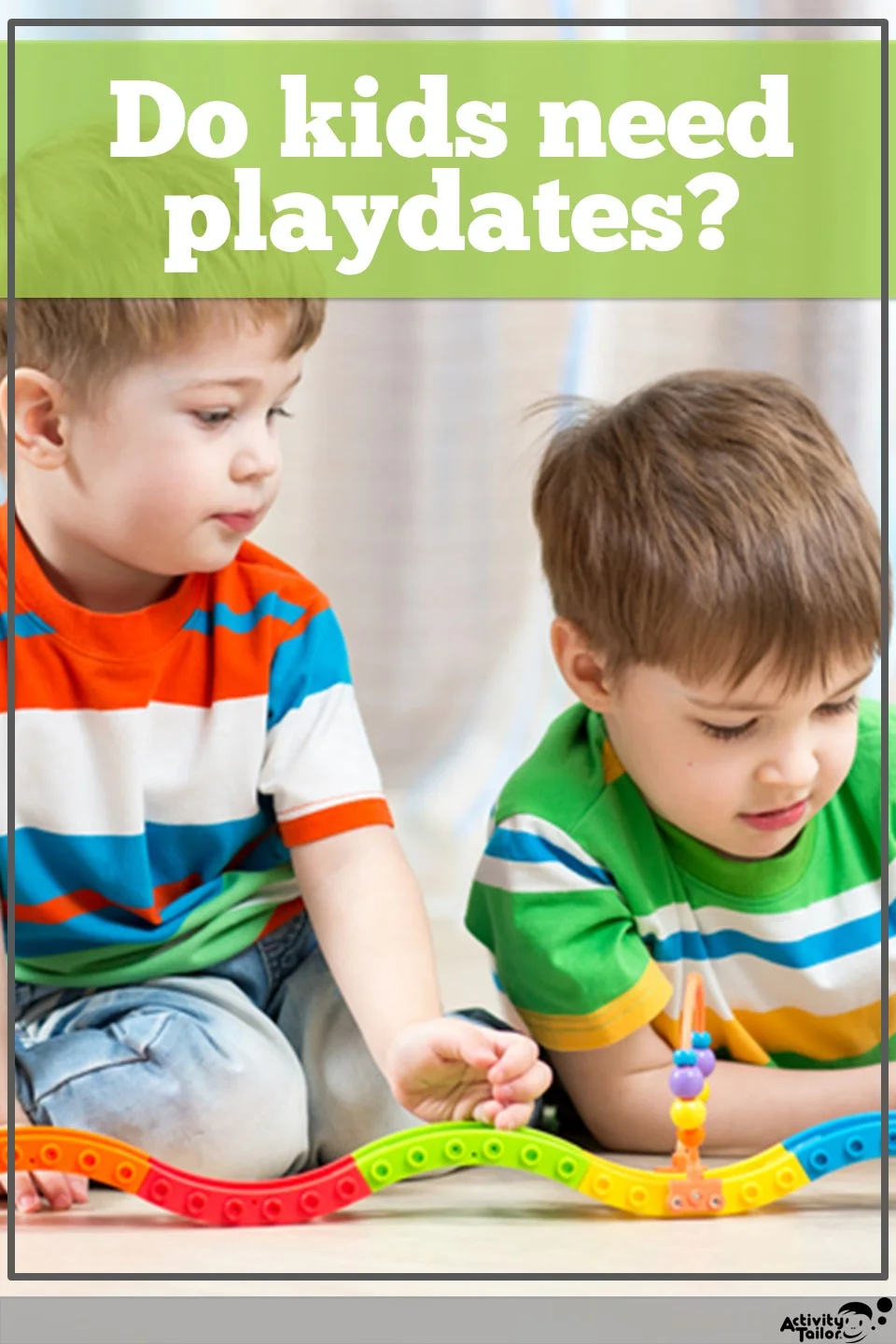
We’ve been “safe at home” for nearly two months now. The mandated time apart from friends, extended family, and social activities have been a gift to some and a nearly unbearable burden to others. Some of us will continue to shelter in place. Others are looking at loosening restrictions and wondering if it’s ok to venture out. But do our children really need playdates? For those with little ones at home, there are concerns about Covid19 exposure, but also whether the lack of peer interaction is having a detrimental impact on development. Let’s explore. People are social creatures. Numerous studies

Read More »

Differences in Boy’s and Girl’s Communication Skills

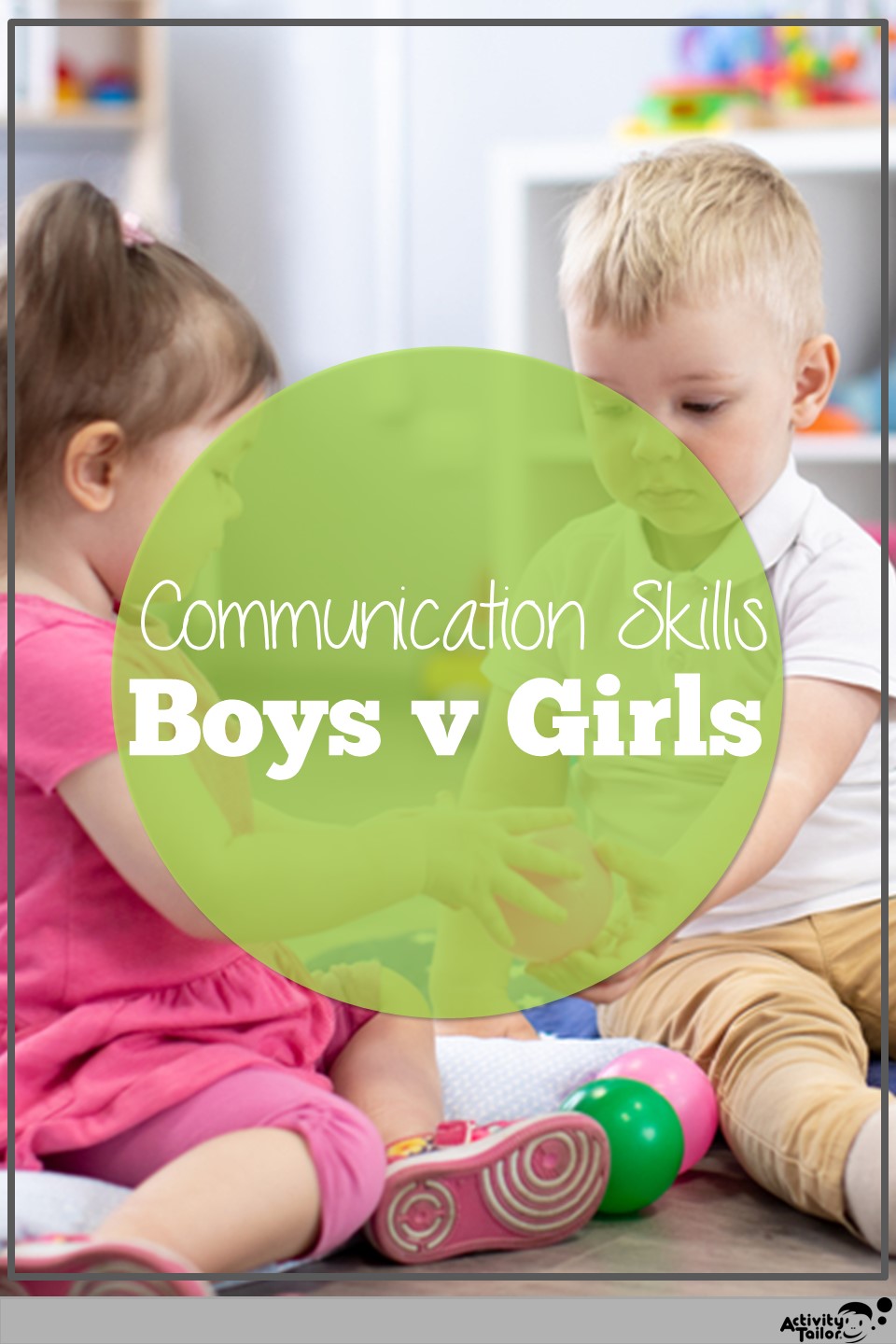
Have you noticed a big difference between boy’s and girl’s communication skills? Have you ever walked into a preschool classroom and had a little girl walk up to you and start chatting in a way that seems well beyond her years? Certainly, way beyond the skills of your own little one? This precocious behavior is both adorable and a bit disconcerting. Is it normal? Grandma would say, “girls develop faster.” They’re right when it comes to communication. The average age for a first word is 7-12 mos. and girls are more likely than boys to fall on the earlier side.

Read More »

Social Skills Projects You Can Do at Home

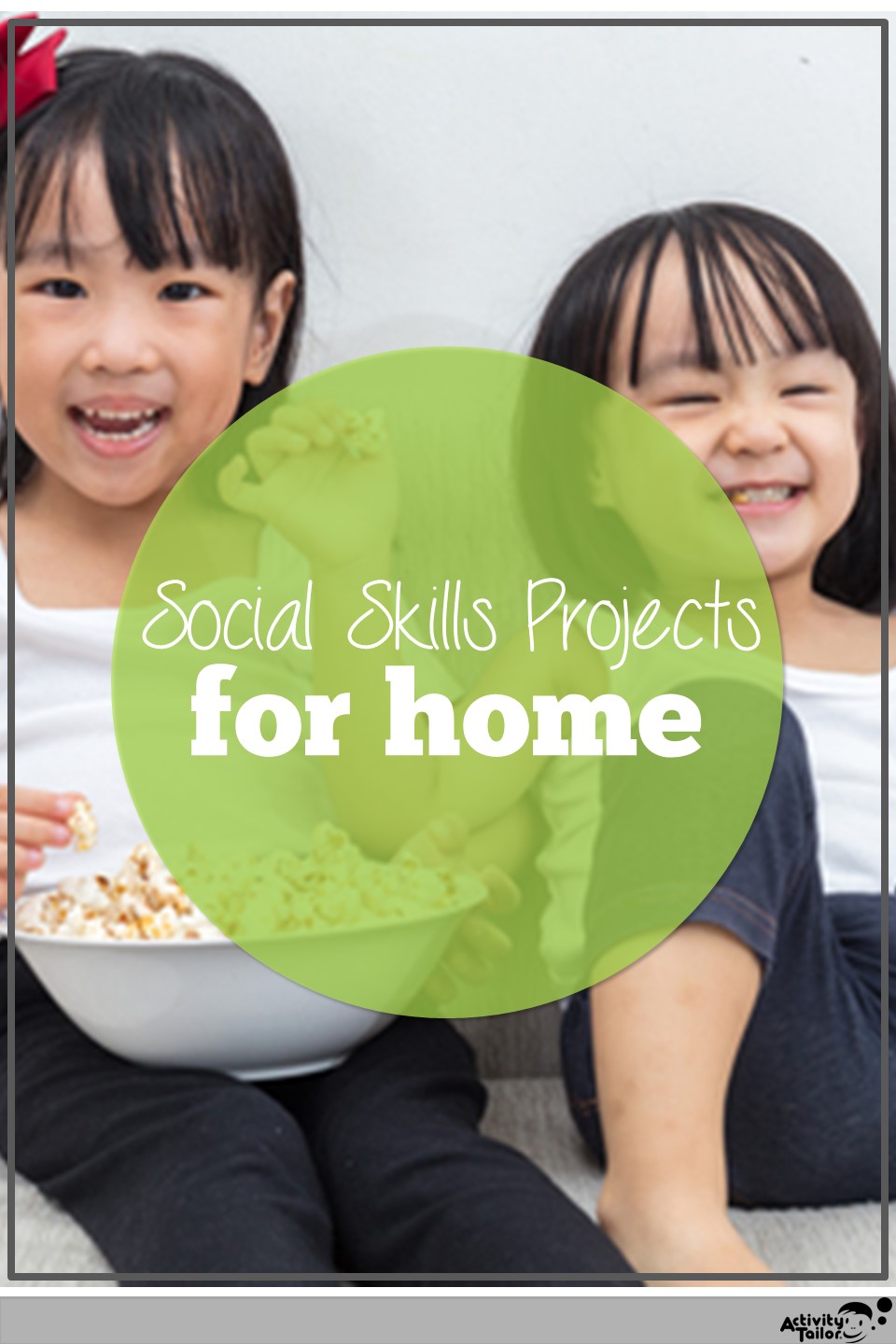
Don’t get me wrong, I love nearly everything within my field that comes my way, but my true sweet spot is early language skills and social skills for children of any age. When it comes to working on social skills, I do a lot of super targeted lessons and explicit learning, but I also include long(er)-term or group projects whenever I can. Not only does this give us lots of real world practice in negotiating social skills in real-time, but they also address executive function skills—an area that many children, especially those struggling with social skills need help with. Social

Read More »
mom imitating child

Why you should imitate your child

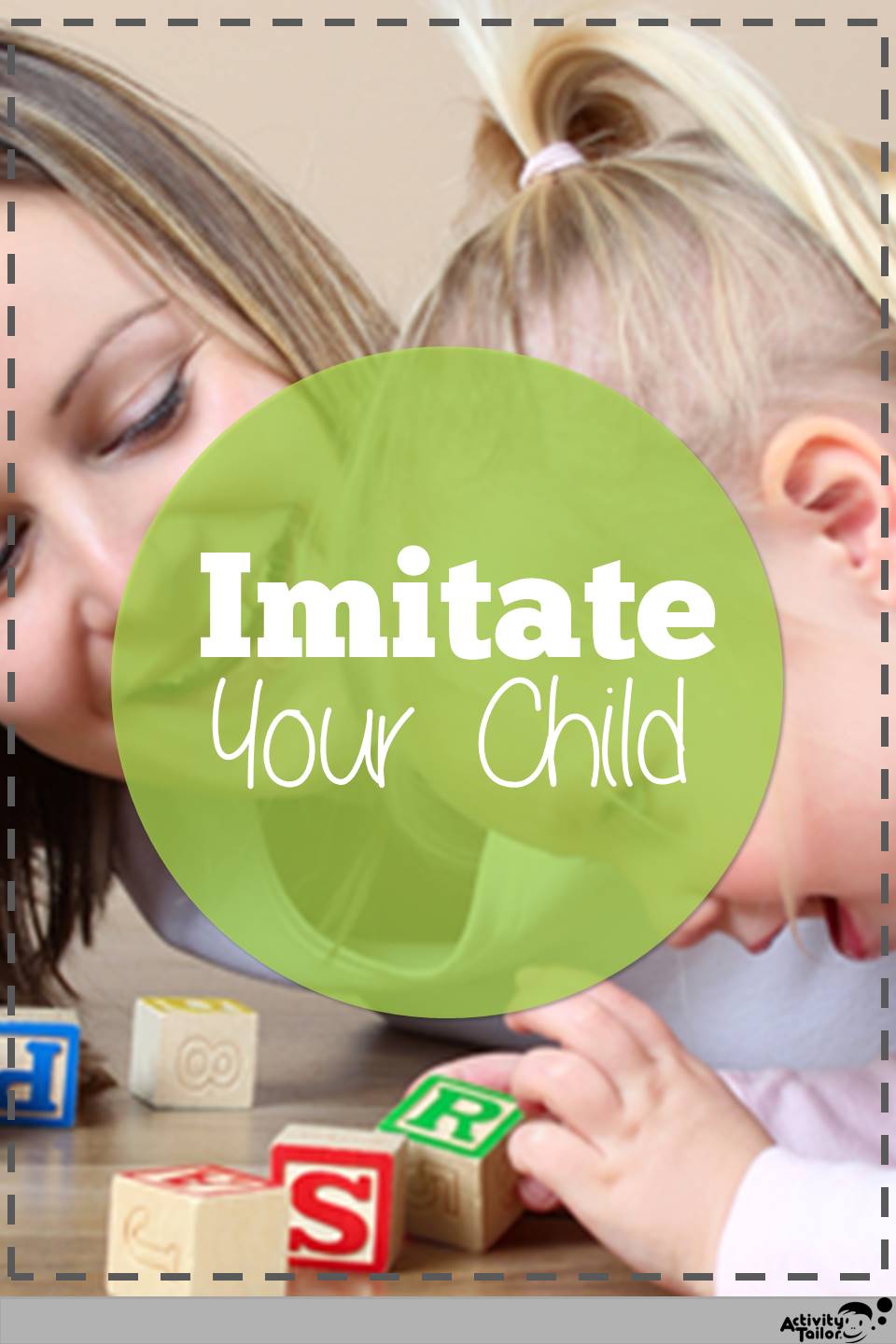
Should we imitate our child? Imitation is the sincerest form of flattery.  (Oscar Wilde) This is what we were told, but in everyday life it rankled. The sister that copied your fashion choices. The annoying kid that repeated what you said. The smothering friend who wanted to do everything you did. Yet there is tremendous power in being the leader. How often does your little one get to call the shots? Toddlers and preschoolers don’t usually get to give a lot of input in their day—and aside from strategic choices (more on this later), they need the structure we provide

Read More »

Is My Child a Late Talker?

What is a late talker? Like it sounds, a late talker is a child between 18 and 30 months who isn’t meeting expected speech and language milestones. They say fewer than 50 words and aren’t yet combining words, but seem to be on track in other areas of development. Often the parents will mention “he seems to understand what we say, he just doesn’t say anything.” About 15% of two-year olds fall into this category. It’s the type of concern that is often met with, “Don’t worry about it. My son didn’t speak until he was 3.” or “I’d wait

Read More »

Teaching Secret Keeping

This is the time of year I’m likely to suggest families work on secret-keeping. Does this sound a little inappropriate? Then think of it as keeping “surprises.” The idea behind secrets is pretty sophisticated and kids who struggle with perspective taking are going to have a particularly hard time (and need some specific instruction) in learning this skill. But it’s important! We keep secrets all the time. Sometimes it’s for really fun stuff like birthday presents, an unexpected note and surprise parties. Sometimes it’s for a harmless joke like putting a plastic spider in the fruit bowl. Sometimes it’s to

Read More »

Are You Interrogating or Modeling?

Fellow SLP, Are You Interrogating or Modeling? It’s a stereotype of movies and books, the mom who won’t stop interrogating their kids with questions. And it’s clear to anyone watching that the incessant interrogation is pushing the kids away whether they’re 10, 20 or 30 years old. And yet… SLPs do the same thing to the little ones in our therapy sessions.  Where? Who? What? Why? When? You feel the pressure of targeting all of the child’s goals and gathering sufficient data, so you inundate them with questions and never truly model the targeted skills. Say… Show me… Do… The

Read More »
Scissor Activities in Speech

Scissor Activities in Speech

Are you the type of SLP who is always up for a good craft, or does the idea of “art” make you sweat? Incorporating scissor activities in the speech room can be a way to bridge these two styles. Why work on scissor skills? Child development skills Scissor practice works on several childhood development skills, including bilateral coordination, eye-hand coordination and develops hand strength. The two most important to me as an SLP are bilateral coordination and hand strength. Bilateral coordination Bilateral coordination is the ability for our brain to use both sides at once. This not only helps with

Read More »

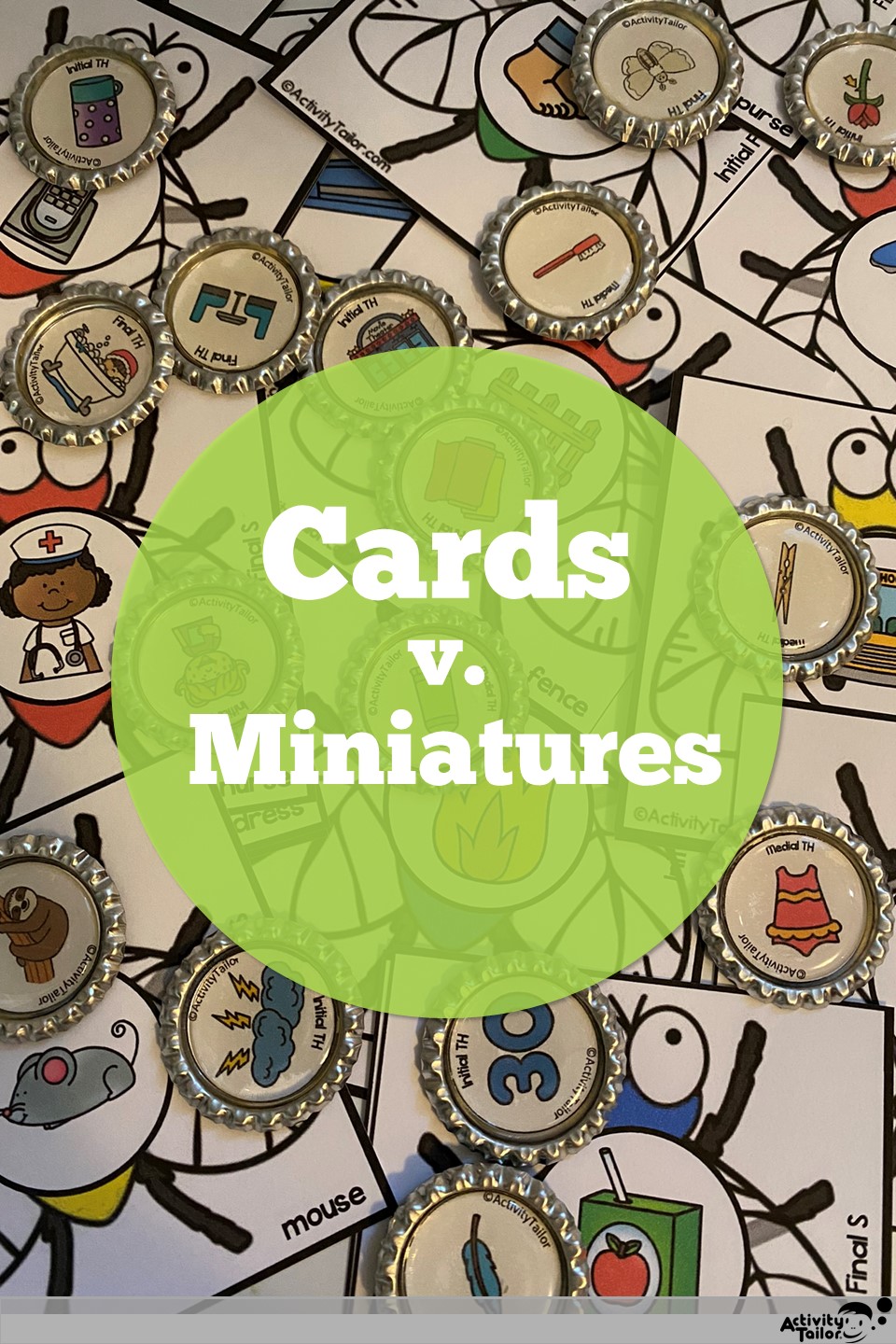
Miniature Objects vs. Picture Cards in Articulation Therapy

Where do you fall in the debate over using miniature objects vs. picture cards in speech sessions? Most SLPs have a definite preference for one. There are a few (like me!) who tend to drift back and forth depending on the child or the target.  Let’s take a look at the pros and cons of using each in articulation based speech therapy sessions. Using miniature objects in speech Speech miniatures are so cute! You see the IG posts, and they look fun and engaging. They really are! But there’s a lot more to it than that. Pros Participation Miniature objects

Read More »
Expecations for speech clarity

Expectations for Speech Clarity

Parents are often confused by speech clarity guidelines especially when it comes to late talkers. If you can’t understand what your child is trying to tell you, isn’t that a clarity issue? Not necessarily. Late talkers are limited with how much language they have which means they struggle to communicate their wants, needs, and feelings. But there are other children who have language skills within expected ranges that are hard to understand because of they way they form their speech sounds. How do speech sounds develop? Many children don’t develop all mature speech sounds in the English language until they’re

Read More »
young girl holding book in speech

Using Books in Speech Therapy

Speech-language pathologists know using books is one of the BEST ways to build language, but are often quick to assign that task to caregivers. Our graduate school classes are great at telling us the “why” we should do something but tend to be weaker in the “how.” If you don’t get experience working with another therapist who incorporates books into the therapy room, it’s easy to feel a little uncertain as to how to do it. The challenges of using books in speech therapy It takes a looong time. Most story books are long especially if they are designed for

Read More »
happy girl on slide action word

Why Action Words are Important

The role of verbs in language development The first words children say are almost always labels for common (to them) objects or people. Makes sense, right? It’s easier to attach meaning to a noun especially one that we have a lot of experience or interaction with. As little ones start building their vocabulary, you’ll find they move on to a wider variety of words. Social words/greetings: These are words like “hi” and “bye” and ones that go along with social games like “peek-a-boo” (even if it’s shortened to just the “boo”). Verbs: These begin as labels for actions like “jump”

Read More »
cute puppet for feed me game

Feed Me Games for Speech Therapy

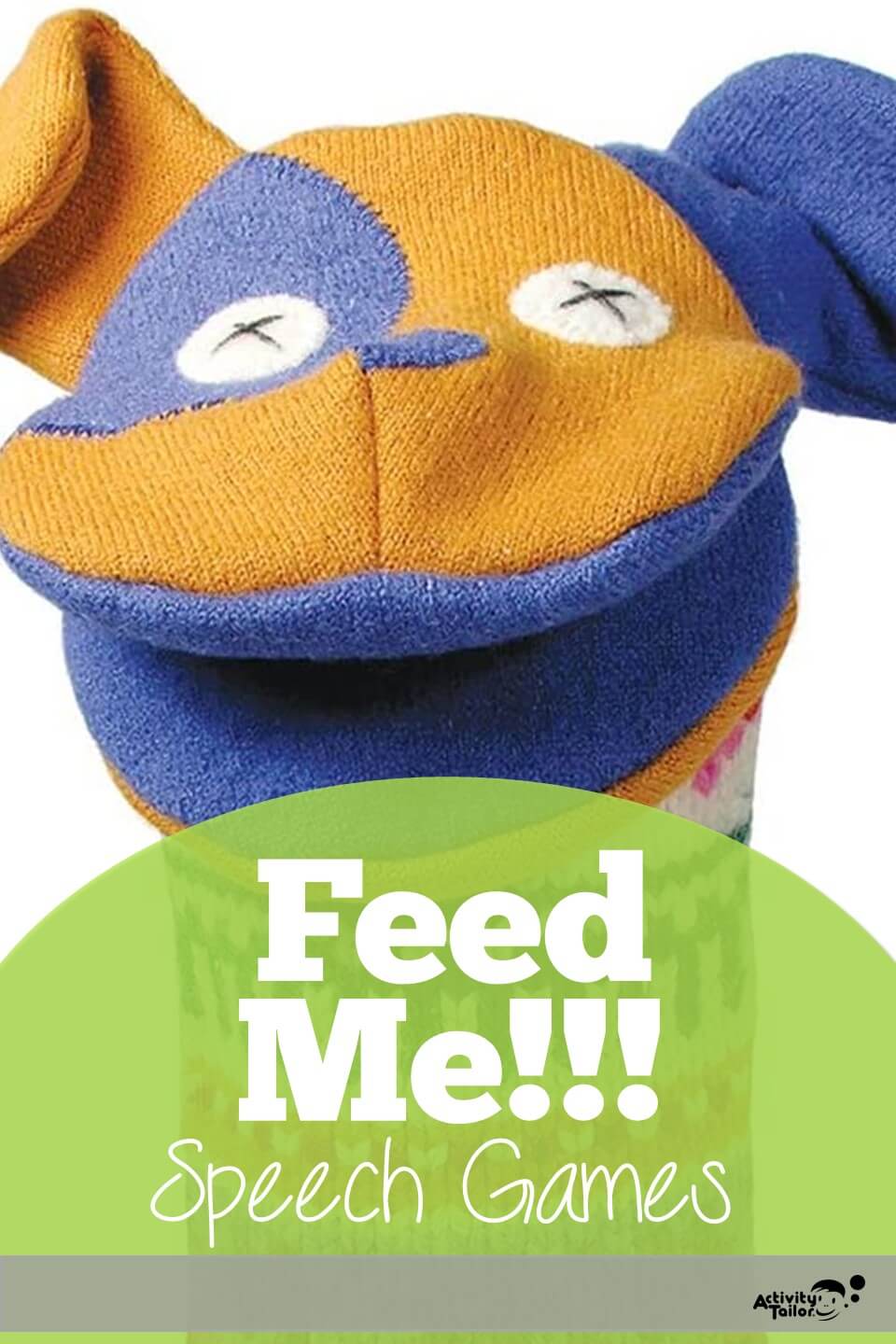
“Feed Me” games for speech therapy are classics because they: are easy to set up engage kids for a long time While they are most often used for articulation trials, they can be used for a wide range of language goals too. Ready to add a “feed me” game to your speech therapy room? Let’s get started! What you need At it’s most basic, you’ll need something that “eats” and food to feed it, but that leaves space for a lot of creativity! As an Amazon affiliate, I may receive a small commission if you purchase products through my links.

Read More »
cute child saying first word

What counts as a first word?

Parents are often surprised (and relieved) at our first meeting when I let them know that a lot of the communication their child is attempting does count as a first word. What counts as a first word? A word is any consistent, and generally unique label, for a specific object, person, action, etc. Here are a few things that count: Exclamations Environmental and animal sounds Signs Vocal approximations Exclamations: These are some of the first words little ones pick up because they are usually said with a lot of emphasis and intonation. These include “uh-oh” and “ow!” Environmental and animal

Read More »
sandcastle with ocean themes in speech therapy label

Ocean Themes in Speech Therapy

When you think ocean themes in speech therapy are you assuming it’s for those of us who see students in the summer? It’s time to reconsider! Ocean themes cover a wide range of activities which means an even wider range of speech and language goals to target. Related themes or titles: Sea creatures Under the Sea Speech on the Beach Sharks Pirates A visit to the Aquarium Speech rooms love pirate themes in September to tie in with Talk Like a Pirate Day! Books with an Ocean Theme Links to purchase books may contain Amazon affiliate links. I receive a

Read More »
toddlers playing near each other

5 Types of Communication Intents

Early language is more about communication intents than vocabulary. Let’s take a look at 5 types we see in early language. Requests When little ones need support with language skills, we tend to focus on requests. This is because: They’re usually very motivating They’re naturally reinforcing It’s easier to set up situations that encourage these interactions They make our days more manageable “Late talkers” have more frequent and bigger tantrums because they’re frustrated by their lack of language (aka their ability to tell you what they want). Helping them learn to express their wants and needs can decrease these outbursts.

Read More »
collage of moms playing with their children

What is your parenting play style?

We all have different interests and different ways of learning. We can use these to find our parenting play style so we enjoy the activities we do with our kids as much as they do! For a quick, free quiz with suggestions for activities you’ll love, click here. Activities based on parenting style: Creative types love messy, hands-on projects. Try arts and crafts, cooking with kids, and sensory bins! You might also like dramatic play like dress-up and creating performances. Active types are ready to go when it comes to sports and other physical activities. You can try children’s sports

Read More »