
Phonemic Awareness: part 1 / MUST-KNOW information about phonemic awareness and speech sound disorders
Do you consider phonemic awareness abilities before beginning to work with students with speech sound disorders? If not, you really should! Read on to learn why & how you should think about and assess these skills. What is phonemic awareness? Phonemic awareness is the final step of a larger process called phonological awareness. It is the ability to notice, think about, and manipulate sounds within words. Specific skills include: Phoneme isolation (initial, medial, and final positions) Blending sounds to form a syllable Segmenting sounds in a syllable Manipulating sounds (adding, deleting, substituting) Why is it important? According to ASHA (The

What to expect from a speech and language evaluation
What can you expect from a speech and language evaluation with a toddler or preschooler? Whether you finally got the referral you’ve been asking for or received a referral you didn’t expect, let’s take a look at what you can expect for your late talker on evaluation day. Before you go You may receive paperwork ahead of time including a release of information form. This allows the speech-language pathologist to share findings with other family members, schools or professionals. It is always your choice as to who has access on your child’s development. If you aren’t sure you’re ready to

Teaching Attributes in Speech Therapy
Consider all the language goals targeted in speech therapy sessions. A huge number fall into the category of teaching categories. Whether it’s increasing vocabulary, categorization skills, teaching descriptive words, or labeling functions, it all falls under the larger umbrella of attributes. What are attributes? Working on attributes in speech refers to improving a student’s understanding of the characteristics of an object. Even the best SLPs cannot teach every single word on a comprehensive vocabulary list. What one CAN do is give a student the ability to recognize salient features. Focus on underlying skills to teach skills to organize one’s thoughts.
How to Increase Your Child’s Attention Through Toy Rotation
Do your kids seem easily bored despite a million toy choices? Does your little one drift from activity to activity, but doesn’t settle down with any of them? Are you constantly overwhelmed by stuff? Try toy rotation! Oftentimes, littles ones are overwhelmed by the number of toys at their disposable, rather than bored. By limiting the number of toys available to a child at one time, you will promote deeper, more creative play and help expand attention skills! How does toy rotation work? Rotating toys involves presenting a limited number of toys to a child. The set of available toys

Jump Scare Games for Speech
Looking for a way to get your students really engaged? Try jump scares game in speech! If you’re a fan of horror films, you know that the potential for a jump scare is going to keep you on the edge of your seat throughout the film and give you a little boost of adrenaline every time one arrives. We can set up a similar, but less scary, situation in our therapy rooms. Using Jump Scare Games in Speech There is a large assortment of jump scare games for kids available and many tie in easily with popular school themes, but
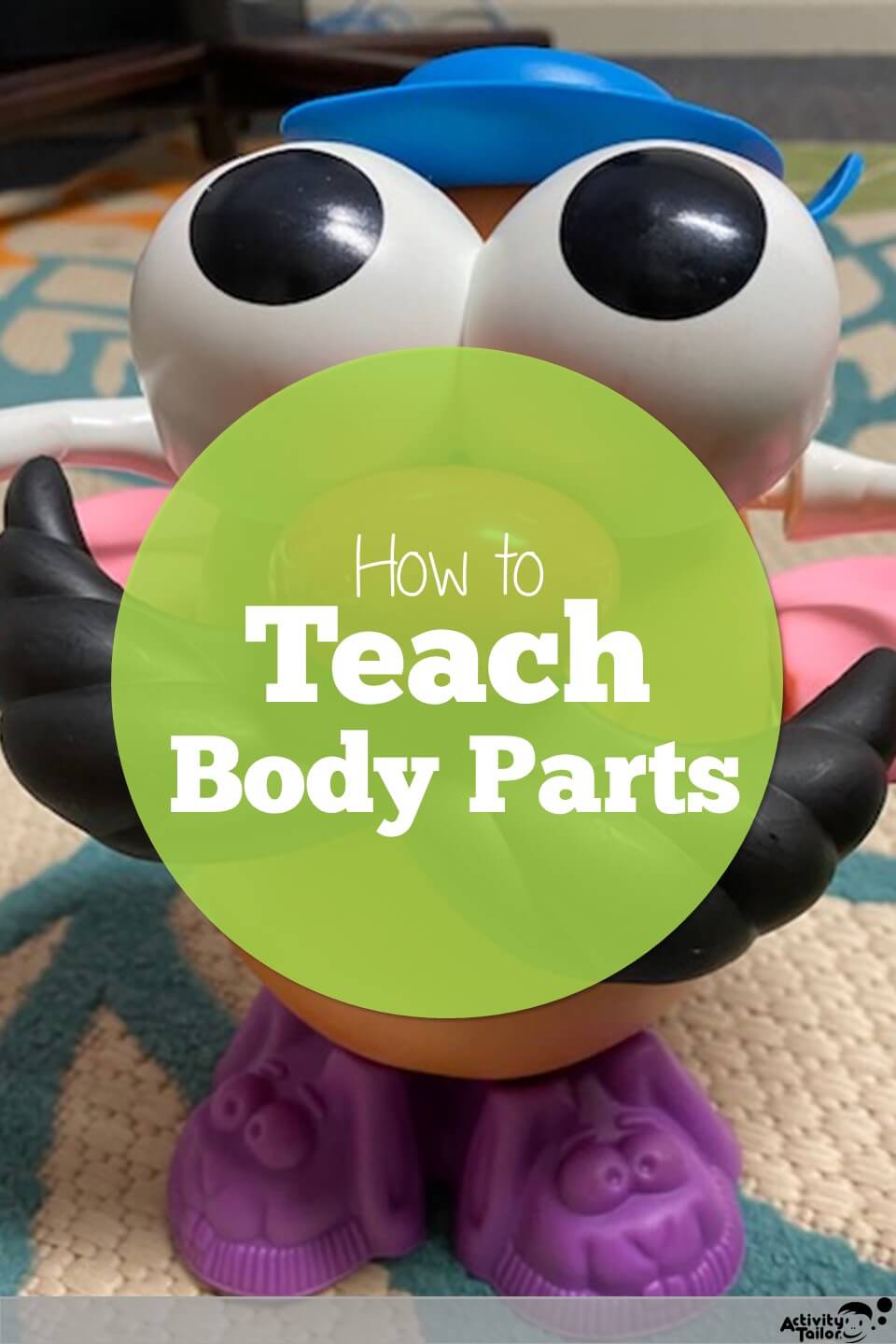
Teaching body parts
Teaching children body parts develops vocabulary, but it also helps with confidence and positive self-image. Children start identifying basic body parts like “nose” around a year. More specific words like “wrist” and “knee” are mastered around age five. Let’s look at some activities we can use to work on this classic language goal. Activities may contain Amazon affiliate links. Bathing baby dolls A shallow bin of water, a baby doll and a washcloth are all you need for some splashing fun! (Oh, maybe add a towel beneath the bin.) Label all the parts of baby that you are cleaning, but

Boosting engagement with…preschoolers!
Preschoolers come to us with limited attention spans. The best way to maintain your sanity is to boost engagement throughout your speech therapy session with easy-to-use materials you already have. Limiting the amount of stuff available to your preschool students means less competition for your attention. Getting really animated and engrossed in your own activity is another way to draw little ones in. What you don’t want to do is chase them around to engage them. That’s a quick way to have the chase become the activity! Tips for Boosting Engagement Check out these quick tips for boosting engagement with
Scissor Activities in Speech
Are you the type of SLP who is always up for a good craft, or does the idea of “art” make you sweat? Incorporating scissor activities in the speech room can be a way to bridge these two styles. Why work on scissor skills? Child development skills Scissor practice works on several childhood development skills, including bilateral coordination, eye-hand coordination and develops hand strength. The two most important to me as an SLP are bilateral coordination and hand strength. Bilateral coordination Bilateral coordination is the ability for our brain to use both sides at once. This not only helps with
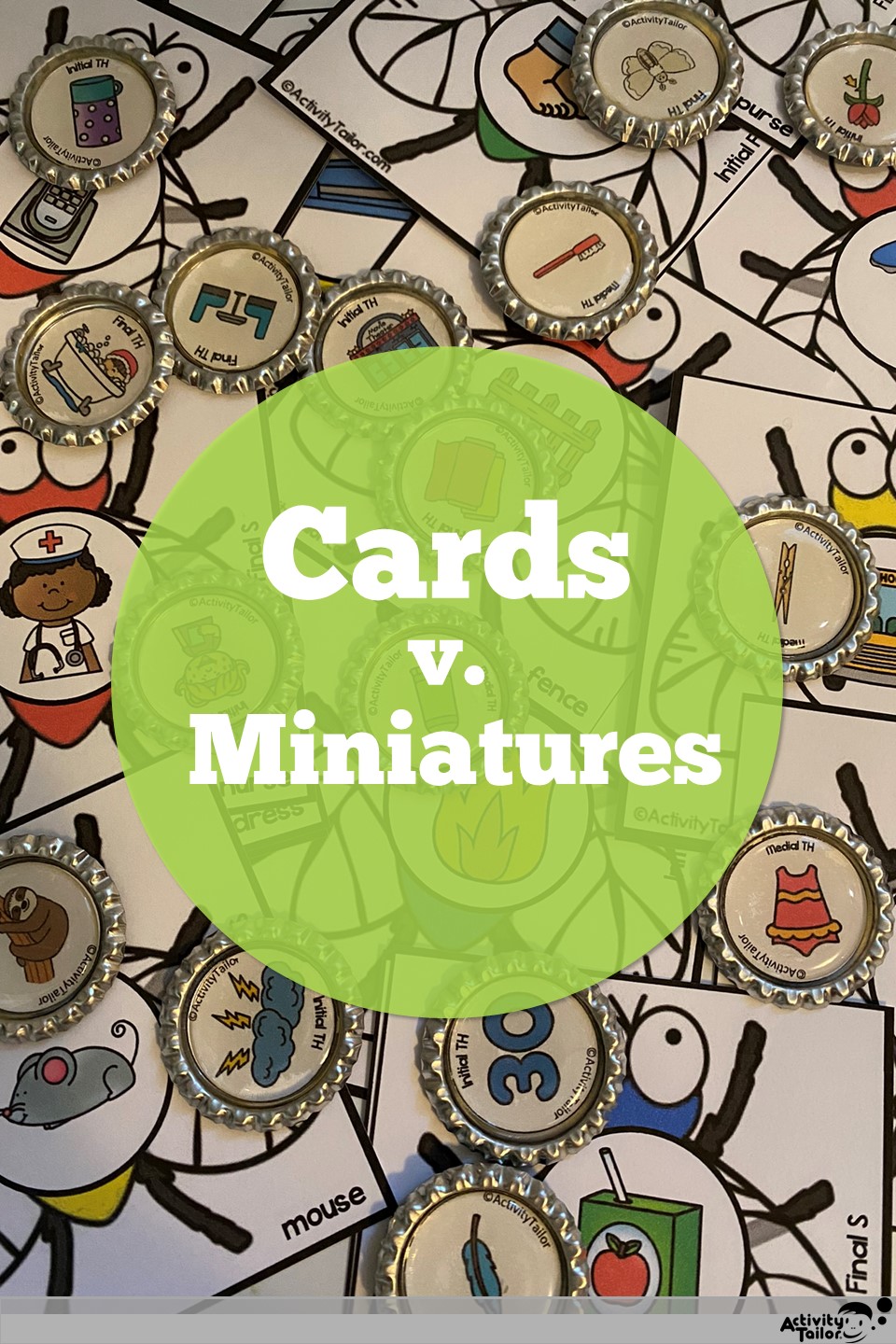
Miniature Objects vs. Picture Cards in Articulation Therapy
Where do you fall in the debate over using miniature objects vs. picture cards in speech sessions? Most SLPs have a definite preference for one. There are a few (like me!) who tend to drift back and forth depending on the child or the target. Let’s take a look at the pros and cons of using each in articulation based speech therapy sessions. Using miniature objects in speech Speech miniatures are so cute! You see the IG posts, and they look fun and engaging. They really are! But there’s a lot more to it than that. Pros Participation Miniature objects

Expectations for Speech Clarity
Parents are often confused by speech clarity guidelines especially when it comes to late talkers. If you can’t understand what your child is trying to tell you, isn’t that a clarity issue? Not necessarily. Late talkers are limited with how much language they have which means they struggle to communicate their wants, needs, and feelings. But there are other children who have language skills within expected ranges that are hard to understand because of they way they form their speech sounds. How do speech sounds develop? Many children don’t develop all mature speech sounds in the English language until they’re
5 Great Tips for Creating a Speech Therapy Room Setup that Works
It’s never too early to think about next year’s speech therapy room setup— especially if you know your space is changing! Whether you are downsizing to a shared nook, moving into a new room, or finally getting a space of your own, your environment plays a huge role in how smoothly your day (and every therapy session) runs. With just a little planning, your space can transform into a place where students are calmer and you feel more “you”, no matter how large or small it is. It doesn’t have to be fancy or Pinterest-perfect to be a functional and

6 Easy & Fun Ways to Get Kids Moving: Using Movement in the Speech Room
As you wind down the school year, you probably notice your students getting extra wiggly! Or maybe you’re working with a few extra energetic kids over summer break, and the idea of sitting still at a table just isn’t cutting it. Either way, incorporating movement in the speech room can be a real game-changer! Not only does movement boost engagement, but it also taps into kinesthetic learning, helps regulate energy, and makes therapy feel more like play than work. Whether you choose to be indoors, outdoors, or somewhere in between, adding a little movement to your sessions can make a
4 Easy Steps for Packing Up Your Speech Room Before Summer
The end of the school year is coming to a close, and while it’s tempting to sprint out the door as soon as the final bell rings, taking some time to pack up your speech room will make your life so much easier when it’s time to start back this fall. Check out how to pack up your speech room in 4 easy steps to finish the year strong and set yourself up for a smooth start next year! Why Spend Time Organizing? Simply put, your future self will thank you! There’s nothing worse than returning to your classroom in
5 Reasons NOT to Use Themes in Speech Therapy— and Why That’s Okay!
As a pediatric SLP, you’re likely always looking for exciting ways to engage your clients and help them meet their goals. While themed therapy activities can be a fun and creative option, they aren’t always the best fit. Don’t worry— this doesn’t mean you are doing something bad! Instead, it’s about understanding when themes might serve your clients or yourself and finding the freedom to be more individualized and child-led. Consider these five reasons NOT to use themes in speech therapy and why this can be a positive change! Reasons NOT to Use Themes in Speech Therapy As an Amazon
6 Advantages to Using Themes in Speech Therapy (& a FREE Year-Long List!)
As a pediatric SLP, you know it can feel like a constant battle to keep therapy sessions engaging, effective, and organized. Planning sessions when you have students of different ages and with different goals and interests can feel overwhelming, too. Using themes in speech therapy is one of the most versatile tools you can use! Whether you’re working with preschoolers or elementary school students, themes help streamline planning, keep kids motivated, and make learning meaningful. Keep reading for more information about using themes in speech therapy and a done-for-you list of themes ready to use all year long! Using Themes

5 Great Summer Options for School SLPs: Start Planning Now!
As the spring months settle in, it’s the perfect time to start thinking ahead to summer. As a school-based SLP, you should make the most of your well-deserved summer break. Whether you’re considering a fabulous vacation, seeing clients privately, or a more creative summer venture, the earlier you decide, the better chance you have at success! Let’s check out 5 great summer options for school SLPs and learn how to best prepare for them now. Why Plan Now? It might feel too early to plan for summer, but making decisions now gives you time to research, prepare, and secure the

SLPs and Childhood Mental Health: 5 Powerful Ways to be Involved
It is becoming more well-known that mental health needs are on the rise in children, but when you think about your role as an SLP, you may wonder what you can really do about it. For many children, their ability to communicate and interact with the world around them is deeply intertwined with their emotional well-being. Don’t overlook the unique position you are in. SLPs and childhood mental health— it’s more important than ever to be involved! Mental Health in Children Today Anxiety, depression, and behavioral challenges have been on the rise in children over the last decade. According to

4 Steps to Stay in Love with Your SLP Job
Working as an SLP is a calling that can feel both extremely rewarding and, at times, overwhelming. You’re making a huge difference in children’s lives as you support their growth and development and build important communication skills. But let’s be honest— between packed caseloads, scheduling woes, piles of paperwork, and getting caregivers on board, it can definitely feel like too much some days. The good news?… You’re in control of so much more than you realize! By focusing on a few key areas, you can rediscover how to stay in love with your SLP job! 1. Focus on the Big

5 of the Most Common Speech Sound Goals & How to Treat Them
Supporting young students in speech therapy is a rewarding process— but sometimes difficult as well. As an elementary SLP, you’re already familiar with the unique challenges that students face in mastering speech sound disorders. Intelligible speech is important for academic success, relationships with peers, and so much more. Let’s explore five of the most common speech sound goals, how to differentiate instruction for individual needs, and interactive resources you can use to help students reach these goals. What to Know about Speech Sound Disorders Before beginning therapy sessions with your students, it’s essential to have a clear understanding of both

An SLP’s Guide to Treating 5 of the Most Common Language Goals
If you feel like you’re in a Groundhog Day loop, there’s a good reason for it! Many of your students likely come to you with the same language goals, even if they need slightly different approaches. Language delays are found in children with a variety of needs and diagnoses, and it’s likely that you will need to address foundational skills for many students. Let’s dive into some of the most common language goals and identify engaging and effective ways to approach them! What You Need to Know About Language Delays Language delays are often associated with a variety of childhood